How to add an availability calendar to your Google Sites vacation rental website
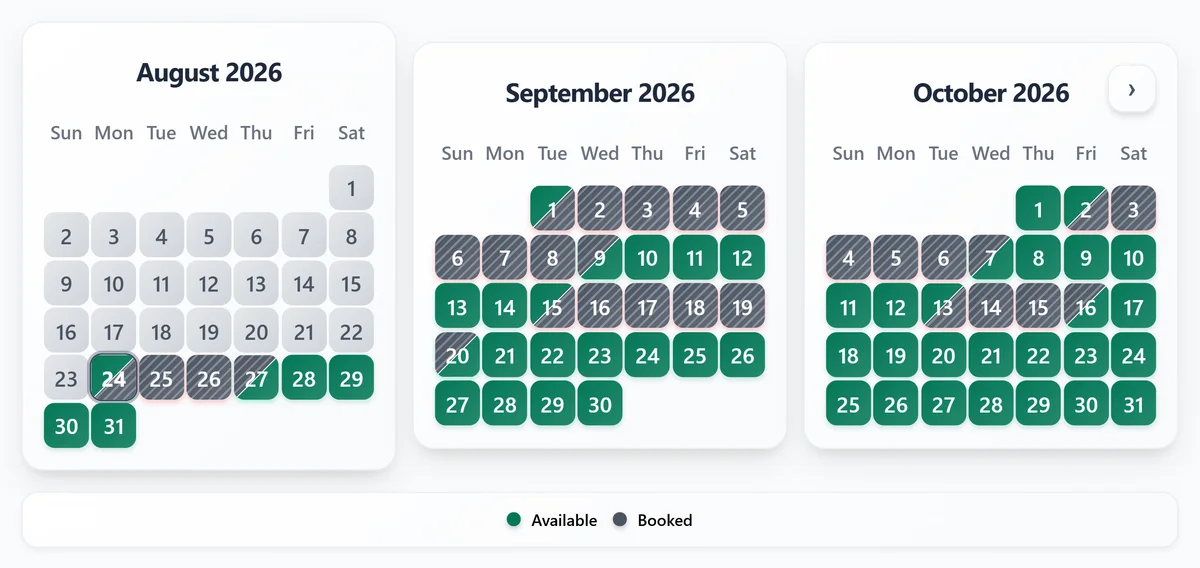
A free Google Sites page can show guests which dates are open, synced from Airbnb, Vrbo and Booking.com. Google Sites puts embedded code in a box of its own and keeps the height you drag it to, so the iframe snippet is the recommended path: insert an Embed code box, paste the snippet, then drag the box until every month shows and publish.
Why add a calendar to your Google Sites site?
Guests want to know whether your property is available before they click through to a form or send a message. A visible availability calendar shortens that decision path, reduces repetitive date questions, and supports a cleaner direct-booking flow on your own site.
- Show booked and open dates directly on your website
- Keep using Airbnb, Vrbo, Booking.com, or any other iCal-compatible source
- Reduce back-and-forth date questions from guests
- Prepare the page for a future direct-booking widget beside the calendar
What you need
- A Google Sites page you can edit, on a computer
- Your RentalBeam calendar widget
- At least one connected OTA or iCal availability source such as Airbnb or Vrbo
Keep setup simple first
Start with one property page, confirm the calendar is visible and accurate, then roll the same pattern across the rest of your site.Setup steps
- 1
Create your RentalBeam calendar
- Open your RentalBeam dashboard and click Add rental.
- Paste your Airbnb, Vrbo, Booking.com, or other iCal source URLs.
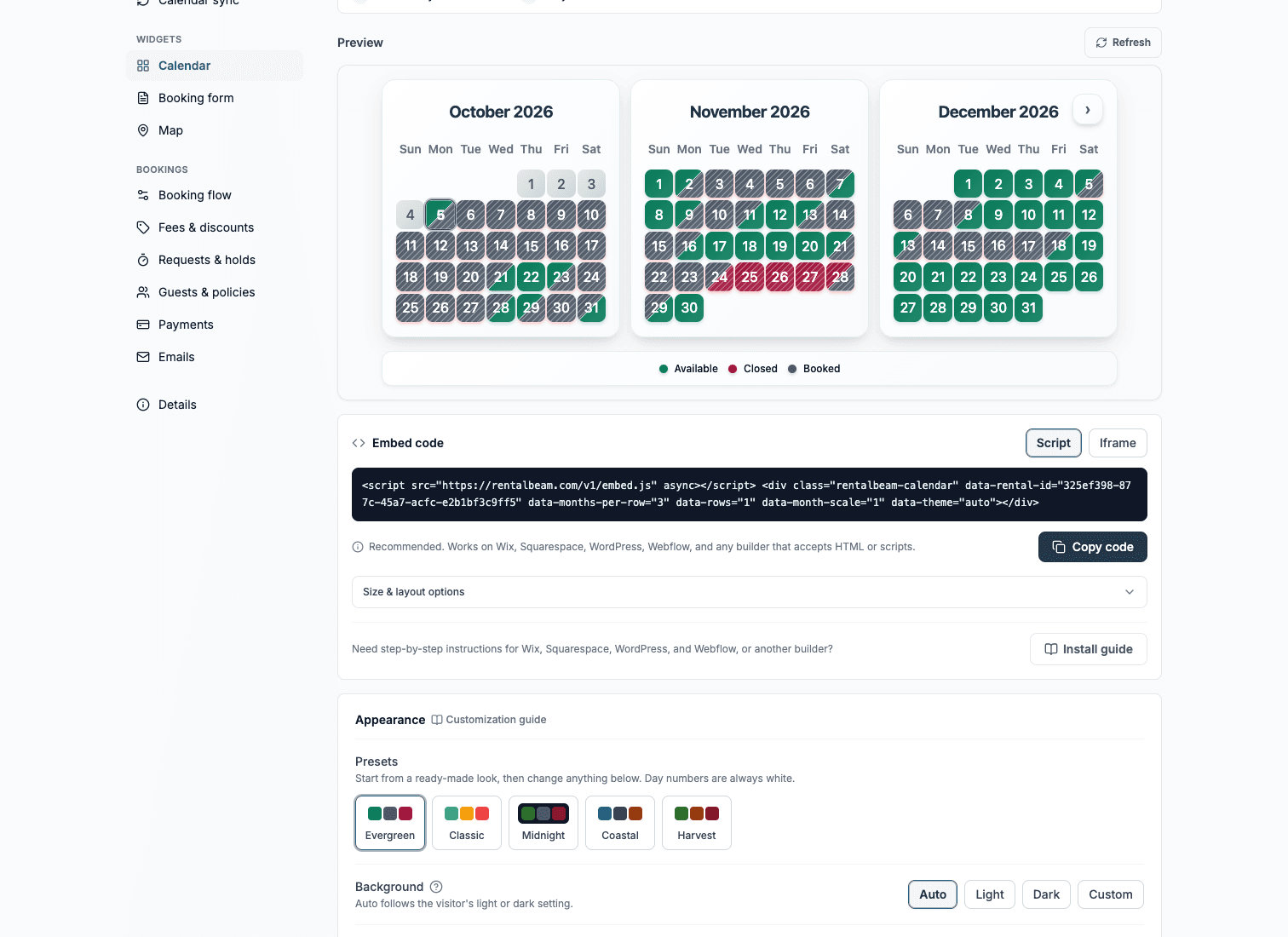
- Check the preview so blocked dates already look correct before you embed anything.
Works with any iCal source
RentalBeam supports any iCal/ICS URL, not just Airbnb. You can merge multiple availability sources into one guest-facing calendar view. - 2
Copy the right embed code for Google Sites
RentalBeam recommends the iframe embed for Google Sites. Use the matching code format below as your reference.
html<iframe src="https://rentalbeam.com/embed/your-calendar-id?months-per-row=3&rows=1&month-scale=1" width="100%" height="446" frameborder="0" loading="lazy" style="border: none; border-radius: 8px; display: block;"></iframe>Google Sites places embedded code in a box of its own, and you set that box's height by dragging, so it cannot grow with the calendar. The iframe snippet fills the box predictably.
Google Sites publishing reminders
- Size the box on a computer. Google Sites works out the phone layout from it, so check the live page on a phone too.
- If the bottom of the calendar is cut off, drag the box taller. The box never grows by itself.
- Use the iframe snippet here, not the script snippet. Google Sites runs embedded code inside its own frame, which the iframe handles best.
- 3
Paste the embed into Google Sites
Builder-specific install steps
Use these steps to place the RentalBeam calendar exactly where guests check dates.
Recommended: IframeGoogle Sites
Insert an Embed code box, paste the iframe snippet, and drag the box tall enough for the widget.
Google Sites places embedded code in a box of its own, and you set that box's height by dragging, so it cannot grow with the calendar. The iframe snippet fills the box predictably.
Use the Iframe tab for this builder.
- Open the page in Google Sites on a computer
- In the right panel choose Insert, then Embed, then the Embed code tab
- Paste the RentalBeam calendar iframe snippet, click Next, then Insert
- Drag the bottom edge of the box until every month shows, then publish and check the live page
Before you publish
- Size the box on a computer. Google Sites works out the phone layout from it, so check the live page on a phone too.
- If the bottom of the calendar is cut off, drag the box taller. The box never grows by itself.
- Use the iframe snippet here, not the script snippet. Google Sites runs embedded code inside its own frame, which the iframe handles best.
- 4
Publish and verify the guest experience
Where to place the calendar on the page
- Put the calendar near your contact or booking details so guests can act right after checking dates.
- Drag the box until the last row of months shows in full. The box never grows by itself.
- Check the published page on a phone, because Google Sites works out the phone layout from the computer one.
Think of the calendar as a conversion aid
Competitor guides consistently put availability close to the main inquiry or direct-booking action. That pattern reduces friction because guests can check dates and act in the same visual area.