PMS vs availability widget: what independent hosts actually need
The right software decision depends on the job you are trying to solve. If you need full operational depth, a PMS may be the better fit. If you need synced website availability and a direct booking path, an availability widget plus iCal workflow is often the sharper choice.
Two different jobs
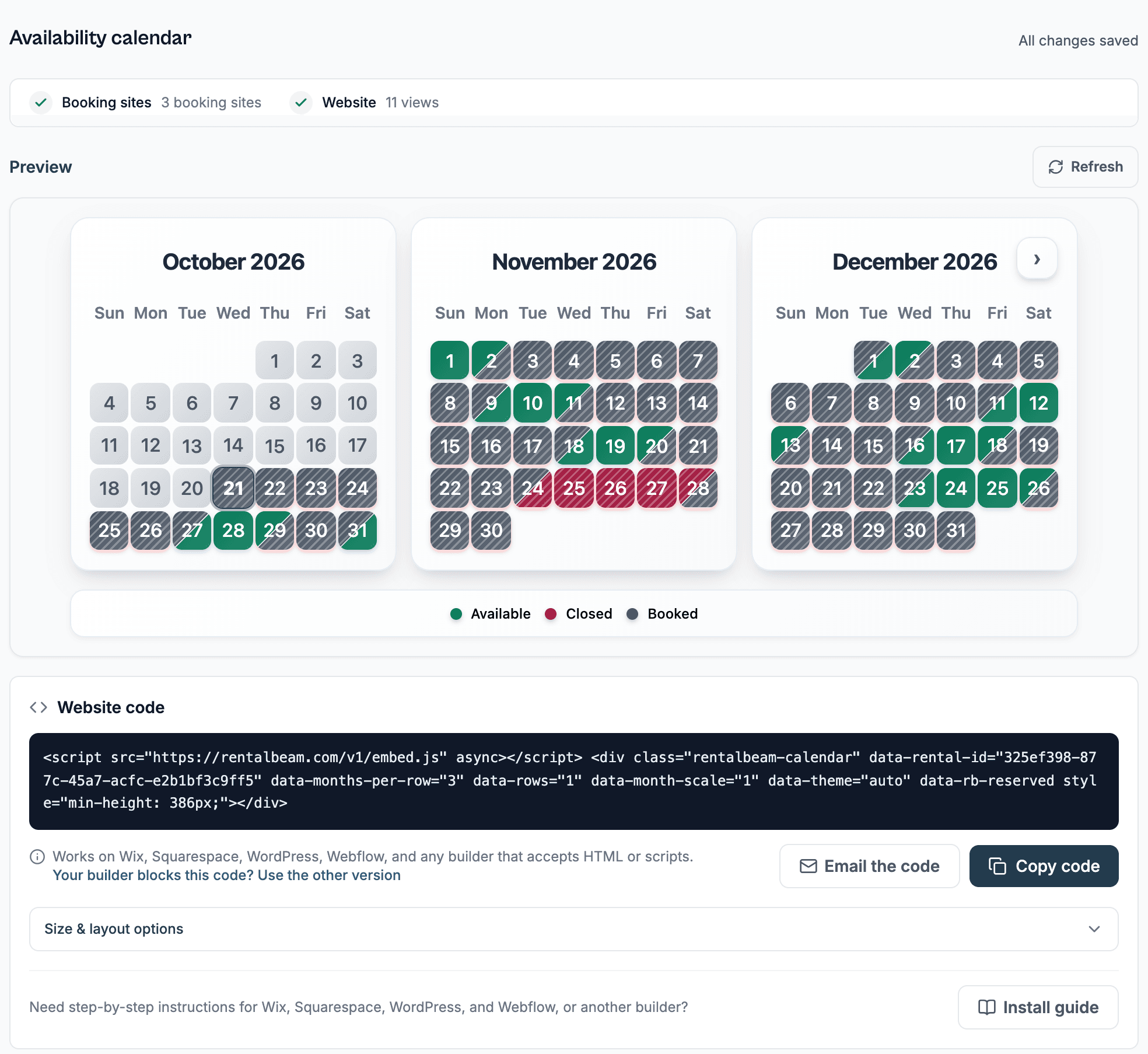
A PMS runs the operational side of a rental business: reservations, housekeeping, reporting, and often a front desk of its own. An availability widget solves a narrower, more common problem: making sure the website you already have shows the truth about what is open.
PMS vs. availability widget at a glance
| Capability | Full PMS | Availability widget + direct booking (RentalBeam) |
|---|---|---|
| Core focus | Broad property operations | Website availability and direct booking requests |
| Website availability calendar | Varies by platform | Included on every plan, including Free |
| iCal sync across Airbnb, Vrbo, Booking.com | Varies by platform | Included, with combined export where iCal import is supported |
| Manual date blocks with labels | Varies by platform | Included on Plus and Pro |
| Direct booking requests | Varies by platform | Included on Pro |
| Guest online payments | Varies by platform | Optional on Pro via Stripe Connect |
| Typical setup effort | Larger onboarding project | About 2 minutes to embed a calendar |
| Works alongside existing OTAs | Varies by platform | Yes, by design |
What a full PMS is optimized for
A PMS (property management system) is all-in-one software for managing bookings, payments, housekeeping, and reporting across a rental portfolio; an availability widget is a narrower tool focused on showing synced calendar availability and collecting direct booking requests on your own website.
- Broader operational centralization
- More software layers under one login
- Deeper workflow complexity for growing operations
- A single large system instead of a narrower website-first setup
That can be the right direction for some teams. But it is often more than an independent host needs when the immediate problem is simply making the website useful for real guests.
What an availability-widget stack is optimized for
- Displaying live availability on your own site
- Syncing Airbnb, Vrbo, Booking.com, Google Calendar, and other iCal sources
- Manual date control and combined export URLs on paid plans
- Adding direct booking requests without forcing a full software migration
A narrower tool can be a better business decision
If the narrower tool solves the actual guest-facing and website-conversion problem, it is often the better first purchase even if it does fewer total things on paper.
See how to accept direct bookings from your vacation rental website for the full setup walkthrough.
Choose based on your current bottleneck
A lighter stack is usually enough when...
- You want guests to see availability on your site.
- You want fewer OTA commission-dependent bookings.
- You want a direct booking request path without full checkout complexity.
- You want to keep using Airbnb and Vrbo as part of the workflow.
A broader PMS direction may make more sense when...
- Your software needs are deeper than website availability and direct requests.
- Your operation has outgrown a lighter website-first setup.
- The business needs a larger operational system than the current RentalBeam focus is designed to solve.
Not sure which booking type fits your listing? Compare the options in Inquiry vs Request to book vs Instant book.